


Table of Contents
Vishwa Shanti Stupa, Rajgir – A Symbol of Peace and Spirituality
Vishwa Shanti Stupa, or World Peace Pagoda, is perhaps the most vital and peaceful of Rajgir’s landmarks. Constructed to represent universal harmony and peace, it draws millions of tourists and pilgrims alike, Buddhists and non-Buddhists, peace-lovers and everyone from across the globe.
Historical Background
It was constructed in the 1960s by the Nipponzan Myohoji Buddhist sect, a Japanese peace organization, under the leadership of Japanese Buddhist monk Nichidatsu Fujii and an adherent of the non-violent teachings of Mahatma Gandhi. The stupa’s construction is an international message of peace and non-violence spread through the teachings of Lord Buddha.
Religious Significance
Rajgir is of particular significance to Buddhism, since Gautama Buddha lived here for a few years, meditating and teaching. The Vishwa Shanti Stupa is situated on Ratnagiri Hill, near Griddhakuta (Vulture’s Peak)—a place where Buddha delivered numerous significant sermons and discourses, such as sections of the Lotus Sutra. This makes the stupa not only a monument, but a pilgrimage site of a spiritual nature.
Architecture and Design
- The stupa is a large white dome, signifying purity and peace.
- It is approximately 120 feet high and about 103 feet in diameter.
- Around the stupa are four golden images of Lord Buddha, each of them depicting a different posture—sitting, standing, walking, and reclining—symbolizing the four important phases of his life.
- The dome is surmounted by a golden spire, enhancing its beauty and sanctity.
Buddhist and Historical Sites Near Vishwa Shanti Stupa
1. Vulture’s Peak (Gridhakuta Hill)
- Distance: Begins at the foot of Ratnagiri Hill.
- Why Visit: One of India’s oldest ropeways, it provides a picturesque trip to the stupa and surrounding destinations.
2. Saptaparni Caves
- Location of the First Buddhist Council.
- Natural caves on a hill near Gridhakuta.
3. Hot Springs at Rajgir
- Holy to both Hindus and Buddhists.
- Thought to possess healing qualities.
4. Nalanda University Ruins
- Located just 15 km from Rajgir.
- Originally one of the world’s greatest centers of learning.
For more Places to visit in Rajgir Click Here….
How to Reach Vishwa Shanti Stupa
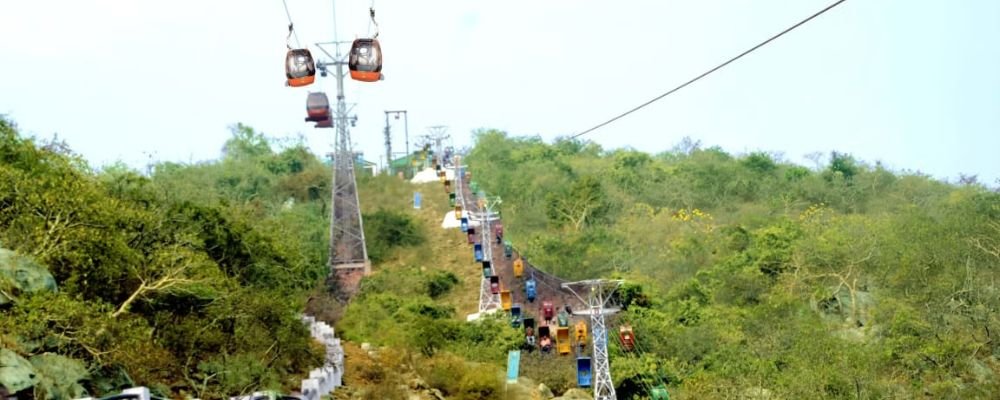
- The Rajgir Ropeway, India’s oldest ropeway, gives access to the summit of Ratnagiri Hill where the stupa stands.
- It gives a panoramic bird’s eye view of the green valleys and rocky hills of Rajgir.
- Alternatively, for those who want a more spiritual or physical pilgrimage, there is a step path with steps to the summit.
Visitor Information
- Timings: 8 AM to 5 PM (Ropeway could have certain timings)
- Optimum time to visit: October to March, when the weather is nice
- Entry Fee: Small cost for ropeway (approximately ₹60–₹100)
Surroundings and Atmosphere
- The surroundings of the stupa are serene, with forested hills and fluttering Buddhist prayer flags in the breeze.
- Chanting, bells, and intermittent drum rolls add to the spiritual atmosphere.
- Griddhakuta, meditation caves, and other significant Buddhist locations are nearby.
Best Time to Visit Vishwa Shanti Stupa, Rajgir
The best time to visit Vishwa Shanti Stupa is during the winter and early spring months, specifically from October to March.
Hear Why :
October to March (Ideal Season)
- Weather: Nice and cool, with temperatures between 10°C and 25°C.
- Experience: Suitable for visiting the stupa, ropeway, and surrounding hills without exhaustion or heat.
- Festivals: You may also see Buddhist festivals such as Bodh Mahotsav or Magha Mela being celebrated in surrounding areas.
Avoid Summer (April to June)
- Weather: Extremely hot, with temperatures rising above 40°C.
- Discomfort: Hiking up hills or taking the ropeway during extreme heat is not comfortable.
Monsoon (July to September)
- Weather: Humid and rainy.
- Hazards: Slippery trails, fog, and possible disruptions in ropeways.
- Landscapes: Green and lush, but less suitable for viewing.
Tip:
Visit in the early morning or late afternoon during peak season for fewer crowds and beautiful sunlight on the stupa and valle
FAQ’s About Vishwa Shanti Stupa
1. Who built the stupa and when?
t was constructed by Nipponzan Myohoji, a Japanese Buddhist group established by Nichidatsu Fujii, following instructions from the Japanese monk in the 1960s. It was constructed in 1969.
2. What is the significance of the stupa?
The stupa represents peace, unity, and non-violence. It is dedicated to the teachings of Gautama Buddha and is a symbol of harmony among nations and religions.
3. How do you reach the Vishwa Shanti Stupa?
ou can access it by ropeway (aerial tram) run by the Bihar tourism department. you can walk up a steep path to the summit of Ratnagiri Hill (takes about 30–45 minutes).
4. Is there an entry fee to the stupa?
No, there is no entrance fee to see the stupa itself. You only pay if you avail of the ropeway.
5. What are the ropeway timings and charges?
Timings: Generally open from 8:00 AM to 5:00 PM
harges: Small fare (around ₹60–₹100 for round trip)


