


Nestled in the serene hills of Uttarakhand, the Katarmal Sun Temple stands as one of India’s most fascinating yet lesser-known architectural treasures. Dedicated to the Sun God, this ancient temple dates back to the 9th century and is renowned for its historical, spiritual, and cultural significance.
Often regarded as the second-largest sun temple in India after the Konark Sun Temple, the Katarmal offers a unique glimpse into the rich heritage of the Katyuri dynasty. Surrounded by breathtaking Himalayan landscapes, this temple is not just a place of worship but also a hidden gem for history lovers and travelers seeking offbeat destinations.
Table of Contents
History of Katarmal Sun Temple
The history of the Katarmal Sun Temple takes us back over a thousand years, making it one of the oldest surviving sun temples in India. Located in the Kumaon region of Uttarakhand, this ancient shrine reflects the deep-rooted tradition of sun worship in Indian culture.
The Katyuri dynasty, one of the earliest ruling dynasties in the Kumaon Himalayas, built the temple in the 9th century CE. It is believed that the temple was commissioned by King Katarmalla, after whom it is named.
The Katyuri rulers were known for their patronage of art, architecture, and religion, and the construction of this temple highlights their devotion to the Sun God.
Also Read: 10 Famous Temples In Almora
Religious Significance in Ancient Times
In ancient India, people revered Surya, the Sun God, as a symbol of life, energy, and prosperity. The presiding deity here is known as Burhadita (Vraddhaditya), meaning the “Old Sun God.”
At its height, the temple served as a major center of sun worship in the region. Rituals and offerings were performed regularly, especially at sunrise, reflecting the importance of solar alignment in temple traditions.
Architectural Significance of the Katarmal Sun Temple
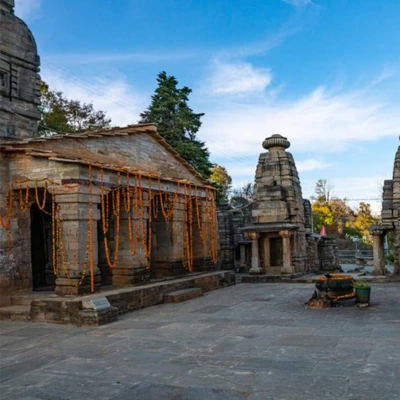
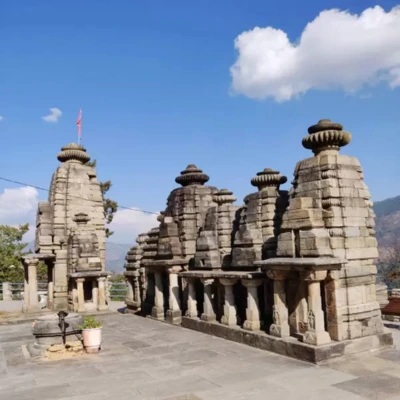
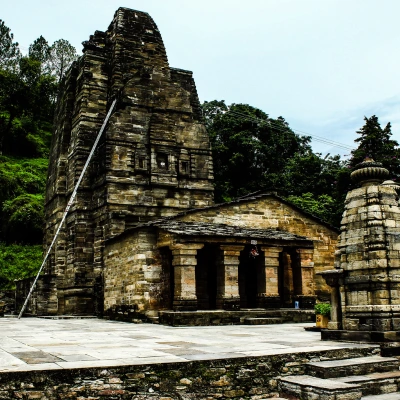
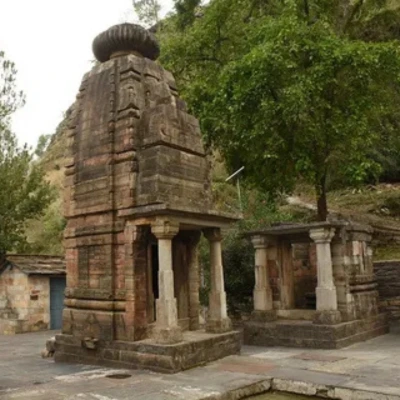
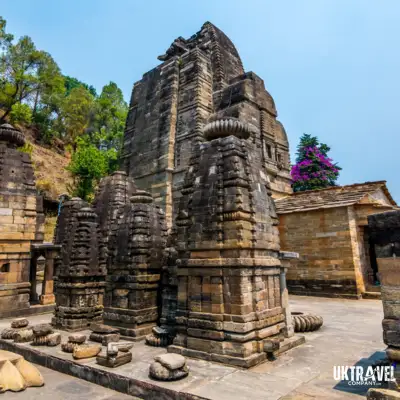
A brilliant example of early North Indian temple architecture, especially the Nagara style.
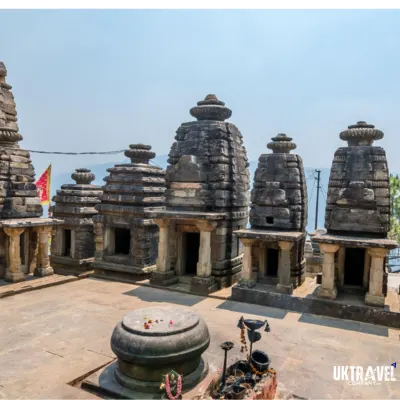
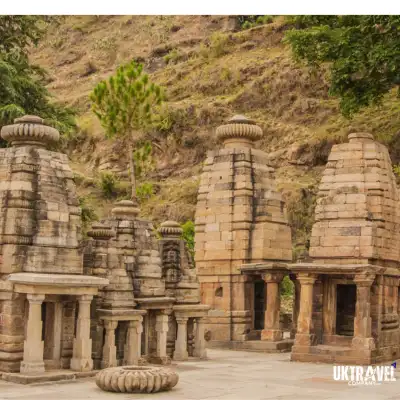
| Key Architectural Features: | 1. Built using massive stone slabs 2. Adhesive made from lime and lentil paste (traditional technique) 3. Main shrine surrounded by 44–45 smaller temples Intricate carvings on pillars, doors, and walls Elevated platform with a sanctum (garbhagriha) and portico |
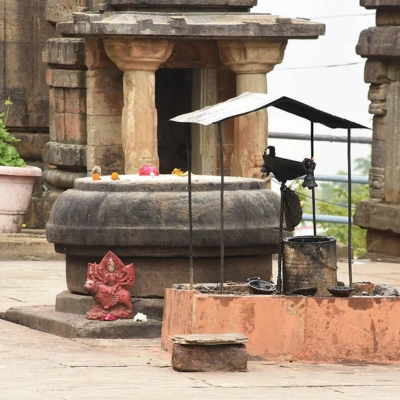
Katarmal Sun Temple Photos
Why You Should Visit the Katarmal Sun Temple
| Unique Sun Worship Temple: Dedicated to Surya (the Sun God), it features a design that allows sunlight to fall directly on the deity. |
| Remarkable Architecture—a fine example of early Nagara-style temple architecture with intricate stone construction. |
| Large Temple Complex: It features the main shrine along with 40+ smaller temples, offering a complete heritage experience. |
| Scenic Natural Beauty – Located near Almora, surrounded by forests and Himalayan views. |
| Short Trek Experience – A peaceful and refreshing trek adds adventure to the visit. |
| Perfect Photography Spot—ideal for capturing ancient architecture and stunning landscapes. |
| Peaceful & Less Crowded—A quiet destination compared to popular tourist temples. |
| Offbeat Travel Destination—a hidden gem for travelers looking beyond mainstream places. |
| Cultural & Spiritual Significance – Reflects ancient Indian traditions, astronomy, and temple design. |
Best Time to Visit the Katarmal Sun Temple
Choosing the right time enhances your experience, especially because the temple is located in the hills and involves a short trek.
Ideal Months to Visit
| Season | Months | Why Visit |
|---|---|---|
| Spring | March – April | Pleasant weather, clear skies, blooming surroundings |
| Summer | May – June | Cool and comfortable compared to planes; great for sightseeing |
| Autumn | September – November | Best time overall – clear mountain views and perfect weather |
Best time of the day: Early morning (sunrise). The temple is renowned for its sunlight alignment, where the first rays fall on the deity.
Monsoon (July – August) – Avoid-
- Heavy rainfall makes trekking slippery
- Risk of landslides in hilly areas
- Limited visibility and travel disruptions
Location of the Katarmal Sun Temple
The temple is located about 17 km from Almora in Uttarakhand, at an elevation of approximately 2,116 meters above sea level.
- Nearest town: Kosi village
- Accessible via a short trek (1–3 km)
- Surrounded by scenic forests and hills
How to Reach Katarmal Sun Temple
| Mode of Transport | Details | A short trek from Kosi village to the temple |
|---|---|---|
| By Air | The nearest airport is Pantnagar Airport | 125 km from temple; taxis available to Almora |
| By Train | The nearest railway station is Kathgodam Railway Station | 90 km; well-connected to major cities like Delhi |
| By Road | 125 km from the temple; taxis available to Almora | 17 km drive from Almora |
| Last Stretch (Trek) | A short trek from Kosi village to the temple | 125 km from the temple; taxis available to Almora |
Places to Visit Near Katarmal Sun Temple
- 1. Almora
- 2. Kasar Devi Temple
- 3. Binsar Wildlife Sanctuary
- 4. Bright End Corner
- 5. Chitai Golu Devta Temple
- 6. Jageshwar Temples
- 7. Simtola Eco Park
- 8. Deer Park Almora
- 9. Dwarahat
- 10. Kosi River Valley
FAQs About Katarmal Sun Temple
1. Why is the Katarmal Sun Temple famous?
It is famous for being one of the oldest Sun temples in India and a fine example of Katyuri-era architecture.
2. Who built the Katarmal Sun Temple?
The temple was built by King Katarmalla of the Katyuri dynasty in the 9th century CE.
3. Which deity is worshipped here?
The temple is dedicated to Surya (Sun God), also known as Bara Aditya.
4. How far is the Katarmal Sun Temple from Almora?
It is located approximately 17 km from Almora.
5. What makes its architecture unique?
Its Nagara-style design, multiple subsidiary shrines, and alignment with sunlight make it architecturally significant.
6. Is trekking required to reach the temple?
Yes, visitors need to walk or trek a short distance from the nearest road point.


