


Nestled deep in the Garhwal Himalayas, Triyuginarayan Temple is one of Uttarakhand’s most spiritually powerful yet peaceful pilgrimage destinations. Known as the mythological wedding site of Lord Shiva and Goddess Parvati, this ancient temple is revered for its eternal sacred fire (Akhand Dhuni), which, according to belief, has been burning since divine times.
Unlike crowded Himalayan shrines, Triyuginarayan offers a calm and soul-stirring atmosphere. Surrounded by pine forests, traditional mountain homes, and sweeping views of the Mandakini valley, it is ideal for pilgrims, spiritual seekers, couples, and travellers looking for an offbeat religious destination in Uttarakhand.
About Triyuginarayan Temple, Uttarakhand
Triyuginarayan Temple is located in the Rudraprayag district, around 25 km from Guptkashi and close to the Kedarnath pilgrimage route. Sitting at an altitude of nearly 1,980 meters, the temple overlooks lush valleys and distant Himalayan peaks.
The name Triyuginarayan means “Lord Vishnu who existed in three Yugas”: Satya Yuga, Treta Yuga, and Dwapar Yuga. It is believed that Lord Vishnu himself witnessed the divine marriage here and played a key role in the ceremony.
Mythological Importance of Triyuginarayan Temple
According to Hindu scriptures, Triyuginarayan is the sacred land where Shiva married Parvati. Lord Vishnu took the role of Parvati’s brother and arranged the divine wedding, while Brahma acted as the priest.
The most sacred element of the temple is the Akhand Dhuni, the eternal fire that was lit during the wedding rituals. Devotees believe this fire has never extinguished and symbolizes eternal love, unity, and spiritual purity.
Many newly married couples and those seeking marital harmony visit the temple to take blessings and sacred ash from this fire.
Historical & Religious Significance
Triyuginarayan Temple shares strong religious ties with Kedarnath Temple, one of the twelve Jyotirlingas of Lord Shiva. Pilgrims visiting Kedarnath often include Triyuginarayan in their itinerary to complete the sacred spiritual circuit of the region.
Ancient texts and local traditions describe Triyuginarayan as a place where divine energies have remained active through multiple Yugas, making it a powerful center of meditation and devotion.
Architecture of Triyuginarayan Temple
The architecture of Triyuginarayan Temple reflects the timeless simplicity and strength of ancient Himalayan temple design. Built entirely of stone, the temple follows the traditional North Indian (Nagara-style) architecture, similar to other sacred shrines in the Kedarnath region. Its solid construction, sloping roof, and compact structure were carefully designed to withstand heavy snowfall, rain, and harsh mountain weather.
What makes the architecture of the Triyuginarayan Temple truly special is how spirituality blends with functionality. The sacred Akhand Dhuni (eternal fire) is placed in the temple courtyard, symbolising the divine wedding rituals of Lord Shiva and Goddess Parvati. Surrounding the temple are three holy water kunds—Rudra Kund, Brahma Kund, and Vishnu Kund—which add both ritualistic and architectural balance to the complex. Overall, the temple’s design mirrors its purpose: simple, powerful, and deeply spiritual, standing unchanged through centuries in the heart of the Himalayas.
Key Architectural Features
- Ancient stone structure with a sloping roof
- Silver-plated entrance door with detailed carvings
- Inner sanctum housing a black stone idol of Lord Vishnu
- Eternal fire pit (Akhand Dhuni) in the temple courtyard
- Three sacred water tanks:
- Rudra Kund
- Brahma Kund
- Vishnu Kund
Pilgrims traditionally bathe in these kunds before offering prayers.
Why Visit Triyuginarayan Temple?
Visiting Triyuginarayan Temple is not just about sightseeing—it is about experiencing a place where mythology, faith, and Himalayan serenity come together. Known as the sacred wedding site of Lord Shiva and Goddess Parvati, the temple holds a spiritual energy that feels calm, pure, and timeless. Unlike crowded pilgrimage centers, Triyuginarayan offers a peaceful environment where devotees can pray, meditate, and connect deeply with ancient traditions.
Surrounded by scenic mountain landscapes and traditional village life, Triyuginarayan Temple appeals to pilgrims, spiritual seekers, couples, and travelers looking for an authentic religious destination in Uttarakhand. Whether you seek divine blessings, wish to explore sacred Hindu heritage, or simply want to experience the quiet beauty of the Garhwal Himalayas, this temple offers a meaningful and unforgettable journey.
Reasons to visit Triyuginarayan Temple:
- Legendary wedding site of Shiva and Parvati
- Sacred eternal fire with deep spiritual meaning
- Peaceful alternative to crowded pilgrimage centers
- Ideal for meditation, prayer, and spiritual retreats
- Popular destination for traditional Hindu wedding rituals
- Authentic Himalayan village experience
How to Reach Triyuginarayan Temple
Reaching Triyuginarayan Temple is relatively easy, as the temple is well connected by road to major pilgrimage towns of Uttarakhand. Located near Guptkashi in the Rudraprayag district, the temple can be accessed by a scenic drive through the Garhwal Himalayas, offering beautiful views of valleys and mountain landscapes along the way. Travelers can reach Guptkashi by road, rail, or air and then continue their journey to Triyuginarayan by taxi or local transport, making it a convenient stop on the Kedarnath pilgrimage route.
| Starting Point | Route | Approx. Distance |
|---|---|---|
| Delhi / Haridwar / Rishikesh | Delhi → Haridwar → Rishikesh → Devprayag → Srinagar (Garhwal) → Rudraprayag → Guptkashi | 450–480 km |
| From Rudraprayag | Rudraprayag → Kund → Guptkashi | ~45 km |
| From Guptkashi | Guptkashi → Sitapur → Triyuginarayan Village | ~25 km |
| Final Destination | Triyuginarayan Village → Triyuginarayan Temple | Walking distance |
Triyuginarayan Weather & Climate
The weather at Triyuginarayan Temple remains cool and pleasant for most of the year due to its Himalayan location. Each season offers a different experience from clear summer skies ideal for sightseeing to snow-covered winters that enhance the temple’s spiritual charm. Understanding the local climate helps visitors plan a safe and comfortable trip, especially in a mountainous region where weather conditions can change quickly.
| Season | Months | Temperature Range | Travel Advice |
|---|---|---|---|
| Summer | April – June | 10°C to 25°C | Best time for travel and temple darshan |
| Monsoon | July – September | 12°C to 20°C | Travel carefully due to rain and landslides |
| Autumn | October – November | 5°C to 15°C | Ideal for peaceful visits and clear views |
| Winter | December – March | -5°C to 10°C | Cold weather; visit only if well prepared |
Triyuginarayan Temple Timings & Darshan Details
Knowing the temple timings and darshan schedule of Triyuginarayan Temple helps visitors plan their visit smoothly and avoid unnecessary waiting. The temple follows a simple daily routine, allowing devotees to offer prayers, attend rituals, and experience the sacred atmosphere at their own pace. Since Triyuginarayan is a peaceful pilgrimage site with fewer crowds, darshan is usually calm and unhurried, making it ideal for devotees seeking a spiritual and meaningful temple visit.
| Details | Information |
|---|---|
| Temple Opening Time | 6:00 AM |
| Temple Closing Time | 7:00 PM |
| Darshan Availability | Throughout the day |
| Best Time for Darshan | Early morning or evening |
| Entry Fee | Free |
| Special Rituals | Available on request |
Accommodation, Attractions & Wedding Rituals at Triyuginarayan Temple
Visitors to Triyuginarayan Temple can expect a simple, peaceful, and spiritually focused travel experience. From staying in traditional village homes to exploring nearby sacred sites and learning about local customs, everything here reflects the purity and serenity of the Himalayan lifestyle.
Accommodation Near Triyuginarayan Temple
Accommodation options near Triyuginarayan Temple are modest yet comfortable, catering mainly to pilgrims and spiritual travelers.
- Local homestays in Triyuginarayan village
- Basic guesthouses with essential amenities
- Better hotel options available in Guptkashi (around 25 km away)
Most stays offer clean rooms, warm hospitality, and home-cooked vegetarian food, making them ideal for a peaceful temple visit.
Food & Local Culture
Food around Triyuginarayan Temple is simple, nutritious, and rooted in Garhwali traditions.
- Pure vegetarian meals are commonly served
- Traditional Garhwali dishes like dal, sabzi, mandua roti
- Small local dhabas and tea stalls near the temple
Alcohol and non-vegetarian food are avoided, respecting the religious importance of the area. Visitors are encouraged to experience the local culture with humility and respect.
Nearby Places to Visit
A visit to Triyuginarayan can be easily combined with other spiritual and scenic destinations in the region:
- Guptkashi – Ancient temples and main stopover town
- Sonprayag – Sacred river confluence
- Kedarnath Temple – One of the twelve Jyotirlingas of Lord Shiva
- Deoria Tal – Beautiful high-altitude lake known for reflections
These nearby places add depth to your spiritual and cultural journey in Uttarakhand.
Triyuginarayan Temple Weddings & Rituals
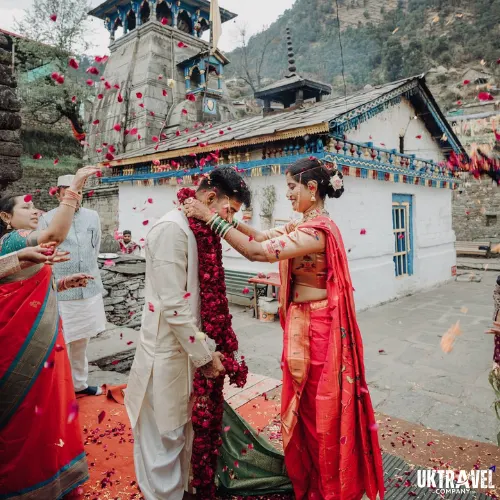
Triyuginarayan Temple is widely known as a divine wedding destination, inspired by the celestial marriage of Lord Shiva and Goddess Parvati. Many couples choose to perform traditional Hindu wedding rituals here to seek blessings for a harmonious married life.
- Marriage rituals are conducted around the Akhand Dhuni (eternal fire)
- Special pujas and blessings can be arranged through local priests
- Prior permission and planning are required
This unique tradition makes Triyuginarayan Temple one of the most meaningful spiritual wedding locations in Uttarakhand.
Important Travel Tips of Triyuginarayan
Planning your trip can make your visit to Triyuginarayan Temple smooth, safe, and stress-free. As the temple is located in a remote Himalayan village, basic facilities are limited, and weather conditions can change quickly. Keeping a few practical travel tips in mind will help you enjoy a comfortable journey while respecting local traditions and the spiritual atmosphere of this sacred destination.
- Start your journey early due to mountain roads
- Carry sufficient cash
- Respect temple traditions
- Avoid peak monsoon travel
- Book accommodation in advance


Final Thoughts & Visitor Experience
A visit to Triyuginarayan Temple is more than a journey to a religious site; it is an experience rooted in faith, history, and Himalayan serenity. As the sacred wedding place of Lord Shiva and Goddess Parvati, the temple holds a timeless spiritual significance that continues to draw devotees, couples, and seekers from across the country.
Away from crowded pilgrimage centers, Triyuginarayan offers a rare sense of peace, allowing visitors to connect deeply with ancient traditions, nature, and inner reflection. Whether you are visiting for darshan, spiritual growth, or cultural exploration, this sacred Himalayan temple leaves a lasting impression and stands as a meaningful reminder of divine love and devotion.
Triyuginarayan Temple Travel FAQs
Where is Triyuginarayan Temple located?
Triyuginarayan is located in the Rudraprayag district of Uttarakhand, near Guptkashi, close to the Kedarnath pilgrimage route.
Why is Triyuginarayan Temple famous?
The temple is famous as the mythological wedding place of Lord Shiva and Goddess Parvati and for its sacred eternal fire (Akhand Dhuni).
Is Triyuginarayan Temple open throughout the year?
Yes, the temple remains open all year, but access may be difficult during peak winter due to snowfall.
What is the best time to visit Triyuginarayan Temple?
The best time to visit is from April to June and September to October, when the weather is pleasant, and the roads are clear.
How far is Triyuginarayan Temple from Guptkashi?
Triyuginarayan Temple is approximately 25 km from Guptkashi and is fully accessible by road.
Can couples get married at Triyuginarayan Temple?
Yes, traditional Hindu wedding rituals are performed here with prior permission and arrangements through local priests.
Is Triyuginarayan Temple suitable for senior citizens?
Yes, the temple is road-connected and does not require trekking, making it suitable for senior citizens.


