
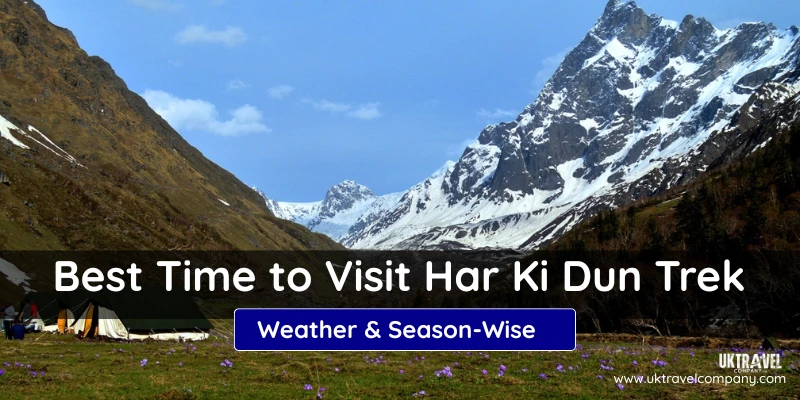
The Har Ki Dun Trek, located in Uttarkashi district of Uttarakhand, is one of the most scenic Himalayan valley treks. Known as the “Valley of Gods,” this trail takes you through ancient villages, pine forests, alpine meadows, and the stunning Swargarohini mountain range.
If you’re planning this trek, the Best Time to Visit Har Ki Dun Trek – Weather & Season-Wise Guide depends on the kind of experience you want — blooming meadows, clear skies, snowy landscapes, or crisp autumn views.
This season-wise and weather guide helps you choose the perfect time to trek Har Ki Dun.
Summer (March to June) – Best for Clear Views & Pleasant Weather
Recommended For: Beginners, photographers, family groups
Temperature:
- Day: 15°C to 22°C
- Night: 2°C to 8°C
What to Expect
- The snow begins to melt, making the trail lush green.
- Meadows bloom with wildflowers.
- Days are long, bright, and perfect for trekking.
- Villages like Osla and Sankri come alive during summer.
Why Visit in Summer?
- Best weather for beginners
- Comfortable trekking conditions
- Clear mountain views
Autumn (September to November) – Best for Crystal Clear Skies
Recommended For: Experienced trekkers, photographers
Temperature:
- Day: 10°C to 18°C
- Night: –2°C to 5°C
What to Expect
- Post-monsoon freshness makes the valley extremely clear.
- Golden-brown forests and colorful landscapes.
- Starry nights and crisp air.
Why Visit in Autumn?
- Best visibility for mountain photography
- Less crowded trails
- Stable weather
Winter (December to February) – Best for Snow Lovers
Recommended For: Experienced trekkers
Temperature:
- Day: –1°C to 8°C
- Night: –8°C to –15°C
What to Expect
- Heavy snowfall turns Har Ki Dun into a winter wonderland.
- Frozen streams and snow-covered meadows.
- Trek becomes moderately difficult.
Why Visit in Winter?
- Perfect for snow trekking
- Magical winter landscapes
- Great for adventure lovers
Note: Heavy snow may block trails in January–February. Trek only with professional guides.
Monsoon (July to August) – Not Recommended
Temperature:
- Day: 12°C to 18°C
- Night: 5°C to 10°C
| What to Expect | Why to Avoid? |
| Continuous rain | Trail becomes unsafe |
| Slippery trails | Poor visibility |
| High chances of landslides | Travel delays |
About Har Ki Dun – History, Mythology & Culture
Har Ki Dun means “Valley of the Gods.”
According to local legends:
- It is believed to be the route taken by Pandavas to reach heaven (Swargarohini Peak).
- The valley is home to hundreds-year-old villages like Osla, where people still follow ancient Jaunsari culture.
- Wooden houses, temples, and traditional lifestyle make the trek culturally special.
Book Your Har Ki Dun Trek Package
ether you want to trek through snow-laden pine forests or witness golden autumn landscapes, planning your Har Ki Dun Trek adventure with a trusted local company ensures safety, comfort, and expert guidance.
Book your with Har Ki Dun Trek UK Travel Company
Why Choose UK Travel Company:
- Expert local guides with mountain experience
- Small, safe group departures
- Hygienic meals and quality camping gear
- 24/7 support and flexible booking options
Join hundreds of happy trekkers who discovered the best of Har Ki Dun Trek with UK Travel Company — your trusted travel partner for Himalayan adventures.
Overall Best Time to Visit Har Ki Dun Trek
March to June (Summer) and September to November (Autumn)
These seasons offer the best combination of weather, visibility, safety, and scenic beauty.
Weather Month-Wise Overview
| Month | Weather | Trail Condition | Best For |
|---|---|---|---|
| March | Cold mornings, melting snow | Clear trail | Beginners |
| April | Pleasant, green | Easy | Nature lovers |
| May | Warm, sunny | Best | Families |
| June | Slightly warm | Best | Beginners |
| September | Clear, dry | Best | Photographers |
| October | Cold nights | Golden landscapes | Pros |
| November | Very cold | Dry & clear | Adventurers |
| December–Feb | Heavy snow | Difficult | Experienced trekkers |
| July–Aug | Rainy | Unsafe | Not recommended |
Frequently Asked Questions (FAQ) – Har Ki Dun Trek
1. What is the best month to visit Har Ki Dun Trek?
The best months are April, May, June, September, and October. These months offer clear skies, stable weather, and beautiful landscapes.
2. Can beginners do the Har Ki Dun Trek?
Yes, Har Ki Dun is considered a beginner-friendly trek, especially from March to June and September to November.
3. How cold does it get in Har Ki Dun?
Summer: 2°C to 22°C
Autumn: –2°C to 18°C
Winter: –8°C to 8°C
Winters are extremely cold because of heavy snowfall.
4. Is Har Ki Dun safe during monsoon?
No, July to August is not safe. Trails become slippery, and frequent landslides make trekking risky.
5. Can I see snow on Har Ki Dun Trek?
Yes. To experience snow, visit between December to March, but the trek becomes challenging.
6. How many days are required for Har Ki Dun Trek?
Generally, 6 to 7 days including travel and trekking.
7. Do I need a guide or can I trek solo?
A guide is highly recommended because:
Trails can be confusing
Weather changes quickly
Winter trails need expert knowledge
8. Is Har Ki Dun Trek good for photography?
Absolutely! Har Ki Dun is one of Uttarakhand’s most photogenic treks with forests, meadows, rivers, and majestic Himalayan views.
9. Is there network coverage on the trek?
You may get limited BSNL network in some villages, but no stable connectivity during most of the trail.
Final Thoughts
The Har Ki Dun Trek is a perfect blend of natural beauty, mythology, and Himalayan adventure. Whether you love green valleys, snow-covered landscapes, golden autumn forests, or clear mountain views — Har Ki Dun has something special in every season.
But the best time to visit this trek remains:
March to June for pleasant weather and lush greenery
September to November for clear skies and stunning landscapes
Choosing the right season ensures a safer, more enjoyable, and unforgettable trekking experience.
If you’re planning your Himalayan adventure, Har Ki Dun is one of the best treks to begin with!

