
Blog
What Is Prasad? The Sacred Science of Temple Offerings Explained

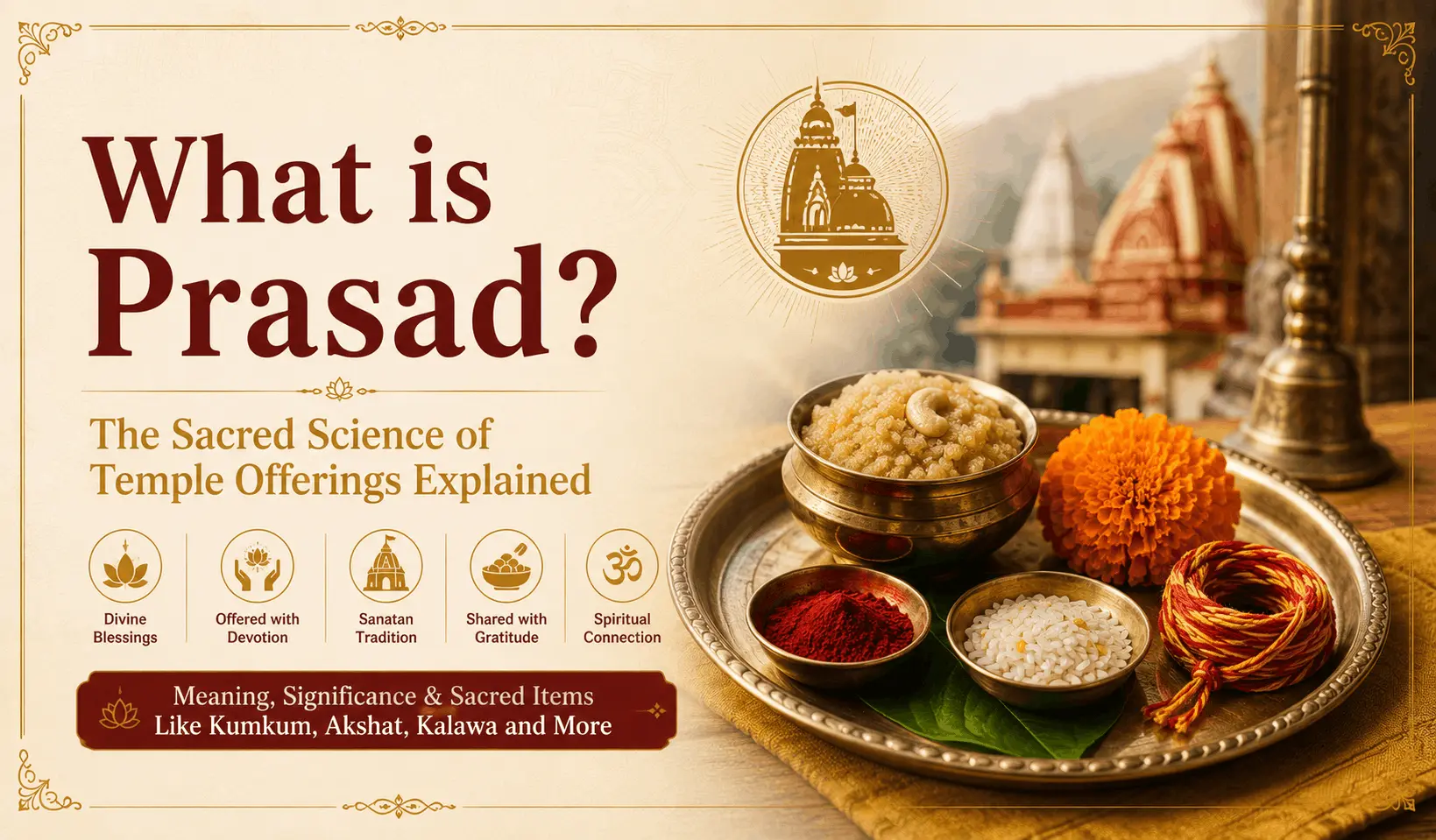
If you have ever visited a temple, attended a puja, or participated in a religious ceremony, you have likely received prasad.
It may have been a sweet, a fruit, some dry fruits, or a small packet containing kumkum and akshat. Most people accept prasad with respect, but many also wonder:
What is prasad, and why is it considered sacred?
In Hindu tradition, prasad is much more than food or an offering. It represents blessings, gratitude, devotion, and the connection between a devotee and the Divine.
In this article, we’ll explore the meaning of prasad, why it is considered sacred, the significance of common items found in prasad packets, and why devotees value receiving prasad from temples and sacred places.
What Is Prasad?
The word Prasad comes from the Sanskrit word Prasada, which means:
- Grace
- Blessing
- Divine favor
- Sacred gift
In Hindu worship, devotees offer food, fruits, sweets, flowers, or other items to a deity during prayer.
Once the offering is made, it is believed to be blessed by the Divine. It then becomes prasad, which is distributed among devotees.
In simple words:
Prasad is an offering that has been presented to God and returned as a blessing for devotees.
This is why prasad is received with respect and gratitude.
Why Is Prasad Considered Sacred?
One of the most searched questions is:
Why is prasad sacred?
The answer lies in the intention behind the offering.
Before becoming prasad, the item is offered with devotion during worship. Through prayers, mantras, and faith, the offering becomes spiritually significant for the devotee.
Prasad reminds us of an important principle in Sanatan Dharma:
Everything belongs to the Divine.
By first offering something to God and then receiving it back as prasad, devotees express gratitude rather than ownership.
For many people, prasad is not valuable because of its material form. Its value comes from the devotion, prayers, and blessings associated with it.
The Tradition of Offering Prasad
The practice of offering prasad has existed for centuries.
Across India, different temples offer different forms of prasad.
Some well known examples include:
- Laddoo at Tirupati Balaji Temple
- Peda at Mathura temples
- Panchamrit in Shiva temples
- Dry fruit prasad in many Hanuman temples
- Khichdi and Bhandara prasad at various ashrams
Although the items may vary, the purpose remains the same:
Offering devotion and sharing blessings.
What Items Are Commonly Found in Prasad?
Many temple prasad boxes contain more than just edible offerings.
Let’s understand the significance of the most common items.
Kumkum
Kumkum is the red sacred powder commonly applied on the forehead.
It symbolizes:
- Auspiciousness
- Divine energy
- Blessings
- Spiritual awareness
Receiving kumkum in prasad is often seen as a sign of divine protection and grace.
Many devotees apply it after prayer or keep it in their home temple.
Akshat (Sacred Rice)
Akshat refers to unbroken rice grains that are often used during Hindu rituals.
The word “Akshat” means “unbroken” or “whole.”
It symbolizes:
- Prosperity
- Abundance
- Completeness
- Good fortune
Akshat is offered during pujas, havans, weddings, and temple ceremonies.
Many devotees place blessed akshat in their home mandir after receiving it as prasad.
Kalawa (Mouli)
Kalawa, also known as Mouli, is the sacred red and yellow thread tied around the wrist.
It symbolizes:
- Protection
- Commitment to dharma
- Blessings from the deity
- Spiritual connection
Kalawa is commonly tied during religious ceremonies and is often included in temple prasad kits.
Sacred Ash (Vibhuti)
In many temples, devotees receive vibhuti or sacred ash.
Vibhuti reminds devotees of an important spiritual truth:
Everything in the material world is temporary.
It encourages humility and spiritual awareness.
Dry Fruits and Sweets
Dry fruits and sweets are among the most common forms of edible prasad.
These items symbolize:
- Joy
- Prosperity
- Celebration
- Sharing blessings with family
Many devotees distribute temple prasad among family members and friends after returning home.
Why Do Devotees Take Prasad Home?
You may notice that many people carefully carry temple prasad back to their homes.
The reason is simple.
Prasad is often shared with family members who could not visit the temple.
For devotees, this is a way of extending blessings beyond the temple premises.
Many people also keep sacred items such as:
- Kumkum
- Akshat
- Kalawa
inside their home mandir as a reminder of the temple visit.
Does Prasad Have Scientific Significance?
The phrase “sacred science of prasad” does not refer to laboratory science.
Instead, it refers to the psychological, emotional, and spiritual value of the tradition.
Prasad encourages several positive practices:
Gratitude
Offering before receiving teaches thankfulness.
Sharing
Prasad is distributed among everyone, regardless of social status.
Community
Temple prasad brings people together.
Faith
Receiving prasad strengthens the devotee’s connection with worship and prayer.
Frequently Asked Questions
What is prasad in Hinduism?
Prasad is an offering made to a deity during worship and then distributed to devotees as a blessing.
Why is prasad sacred?
Prasad is considered sacred because it has been offered during prayer and is received as a symbol of divine grace and blessings.
Can prasad be shared with family?
Yes. Sharing prasad with family and friends is a common tradition.
What is the significance of kumkum in prasad?
Kumkum represents auspiciousness, blessings, and divine energy.
What is akshat used for?
Akshat symbolizes prosperity, abundance, and completeness and is widely used in Hindu rituals.
Why is kalawa included in prasad?
Kalawa symbolizes protection, blessings, and spiritual commitment.
In this way, prasad serves both spiritual and social purposes.
Why Temple Prasad Feels Special
Many people notice that temple prasad feels different from ordinary food.
This feeling often comes from the experience surrounding it.
Prasad is connected to:
- Prayer
- Faith
- Devotion
- Pilgrimage
- Family traditions
Whether received at a village temple or a major pilgrimage site, prasad carries emotional and spiritual significance for devotees.
Prasad from Sacred Places
Across India, devotees often seek prasad from important temples and spiritual destinations.
Some examples include:
- Kainchi Dham
- Tirupati Balaji Temple
- Vaishno Devi
- Kedarnath
- Badrinath
- Hanuman Garhi
- Mahakaleshwar
For devotees who cannot travel, receiving prasad from these places helps them feel connected to the temple and its traditions.
Final Thoughts
Prasad may appear simple on the outside, but its significance goes much deeper.
It represents devotion, gratitude, blessings, and the timeless tradition of offering before receiving. Whether it is a sweet from a temple, a handful of akshat, a pinch of kumkum, or a sacred kalawa, each item carries spiritual meaning for devotees.
For generations, receiving prasad has been one of the most cherished parts of temple worship. It reminds us that faith is not only expressed through prayer but also through sharing blessings with others.